Insights

Credit Spreads, RateCuts and the Next Phase for Fixed Income

Bond performance is driven by more than just movements in interest rates. In the current environment, understanding the interaction between risk-free yields, credit spreads, and bond prices is critical to assessing risk and return across different segments of the credit market.

Yield = Risk-Free Rate + Credit Spread

Base rates remain elevated relative to the past decade, while credit spreads, particularly in higher-quality segments remain compressed by historical standards. This starting point is critical for assessing forward returns.

The Current Backdrop: High Yields, Tight Spreads

As of early February 2026:

  • Investment Grade (IG) yield: 4.78%
  • IG spread: 77 bps
  • High Yield (HY) yield: 6.55%
  • HY spread: 286 bps

All-in yields appear attractive. However, much of that yield is driven by elevated government rates rather than unusually wide credit spreads.

Relative to the past five years:

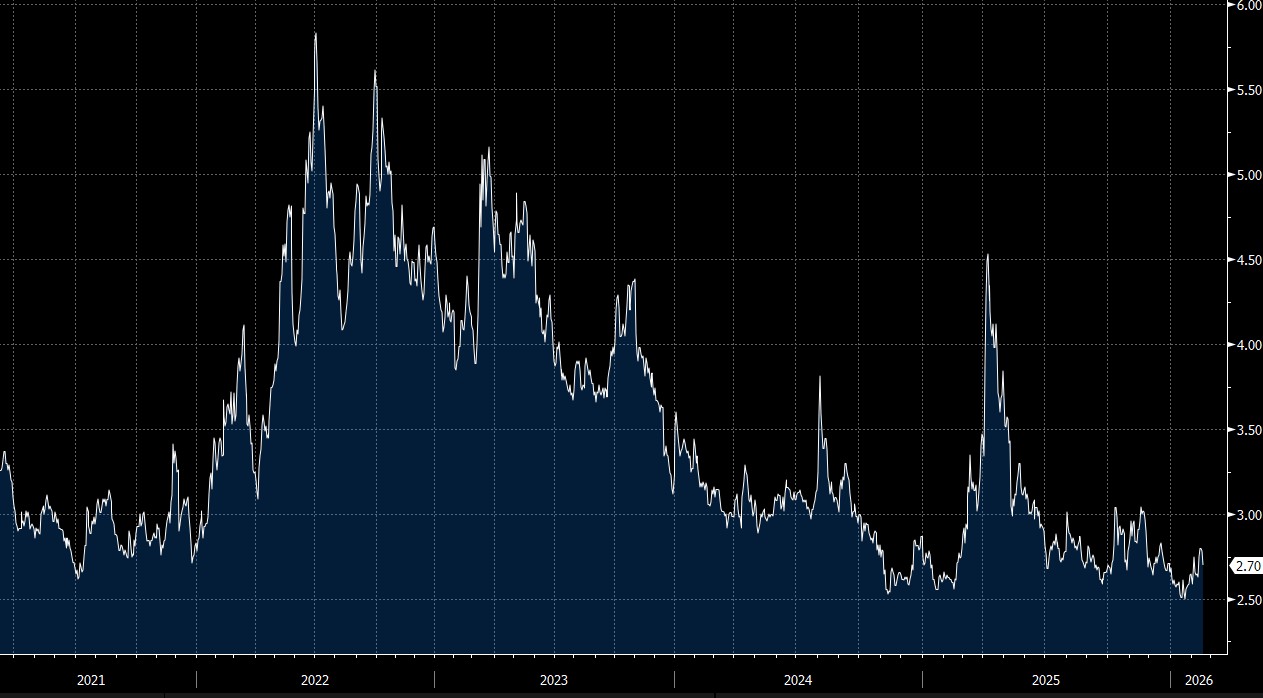
  • IG spreads are near the tighter end of their historical range
  • HY spreads are compressed compared to stress episodes such as late 2022-2023
  • Valuation cushion from further spread compression appears limited

In other words, today’s income opportunity is rate-driven, not spread-driven.

Historical Spread Context

Over the past two decades, US investment-grade spreads have averaged approximately 130-150bps, with cyclical tights near 80-100bps and stress peaks above 300bps. High yield spreads have averaged closer to 450–500bps, tightening to 250–300bps in benign environments but widening sharply to 800–1,000bps or more during recessionary or systemic shocks (1900+bps during the 2008 financial crisis and 870+bps during the Coronavirus pandemic). Widening episodes have historically been faster and more nonlinear than compression phases, reflecting the asymmetric nature of spread risk.

With spreads currently positioned closer to the tighter end of these historical ranges, incremental compression potential appears limited relative to earlier-cycle opportunities. In this context, carry becomes the dominant driver of returns, while performance grows more sensitive to macro data and liquidity conditions.

History also shows that policy easing does not automatically translate into tighter spreads. In soft-landing scenarios spreads can remain contained, but when easing is growth-reactive, widening in lower-rated and subordinated segments has often offset the benefit of falling base rates. Starting valuations therefore matter significantly, reinforcing the need fors electivity, structural discipline, and quality bias.

5-year view of IG Option Adjusted Spreads (OAS)
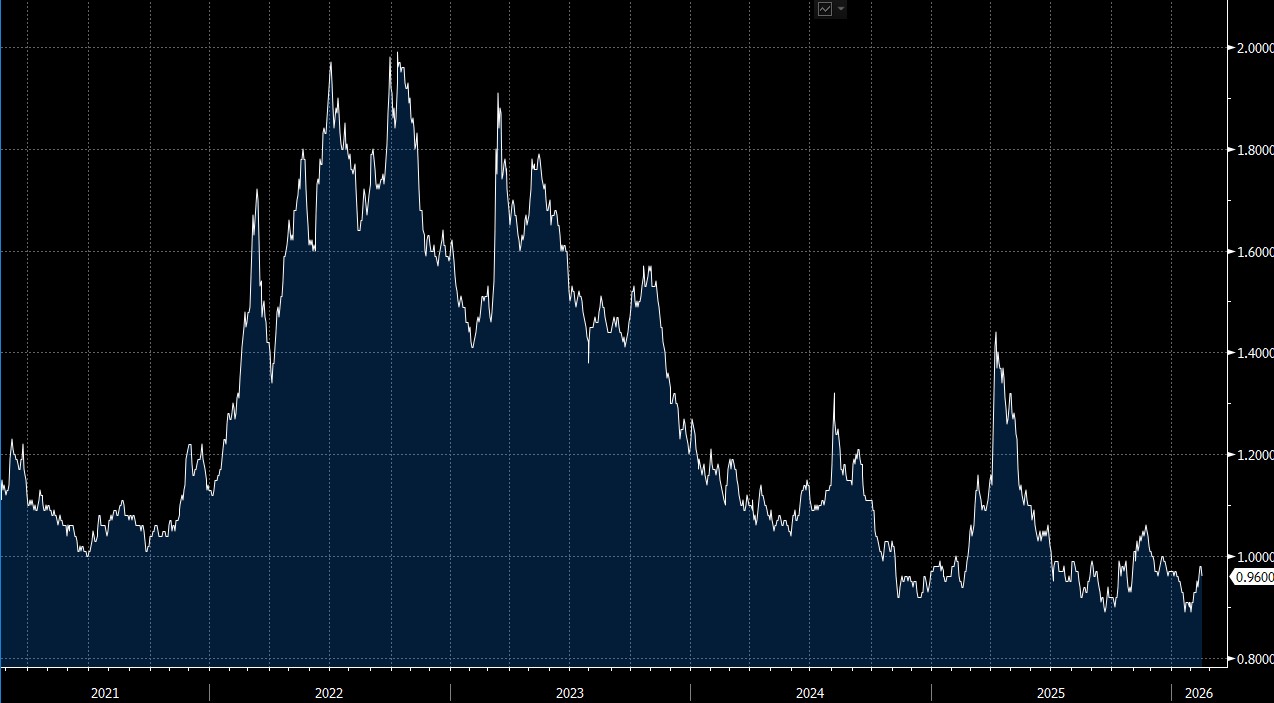
5-year view of High Yield Option Adjusted Spreads (OAS)

Where We Are today

The charts above covering option adjusted spread of IG securities and secondly high yield securities of a 5-year period demonstrate some of the widest spread levels recorded (2022-2023) and their contraction in the years following to date. We now find ourselves in a market with historically tight spreads across credit ratings.

Government bond yields remain elevated relatively, reflecting restrictive monetary policy and uncertainty around the timing of rate cuts. At the same time, credit spreads across most investment-grade sectors are still contained, while lower-rated and high-yield segments show greater sensitivity to changes in growth expectations and risk sentiment.

This distinction is important: even if government yields stabilize or fall, bond prices can still come under pressure if credit spreads widen.

Credit Spreads and the Impact Across Ratings

Credit spreads vary meaningfully by rating and play a decisive role in performance:

• Higher-rated bonds (AAA–A) typically exhibit lower spreads and more stable pricing, with returns driven primarily by movements in government yields.

• BBB-rated bonds, often considered the crossover segment, offer higher yields but are more vulnerable to spread volatility during periods of economic stress.

• High-yield bonds provide the highest all-in yields, but price performance is dominated by changes in credit spreads rather than interest rates.

Why the Next Move in Spreads Matters

With spreads at tight levels, the risk-reward profile becomes increasingly asymmetric. The potential for further compression is limited, while vulnerability to widening grows, particularly if macro or liquidity conditions deteriorate. Rate cuts alone are not sufficient to drive returns, the underlying reason for policy easing ultimately determines spread direction and the degree of performance differentiation across credit markets.

SensitivityProfile

Segment Rate Sensitivity Spread Sensitivity
IG High Moderate
HY Moderate High
AT1 Low–Moderate Very High

Strategic Implications
Given elevated valuations, margin for error is thin. If easing reflects weakening growth rather than proactive support, spread risk can quickly outweigh rate benefits, especially in lower-rated and subordinated segments. In this environment, maintaining a quality bias and disciplined selectivity is essential, as dispersion across credit tiers is likely to widen as the cycle progresses.

The Next Phase
The next phase of the cycle is likely to be characterized by greater performance differentiation across ratings and capital structures, an increased emphasis on balance sheet strength, and heightened sensitivity to macro data and liquidity conditions.

In a benign soft-landing scenario, investment-grade credit offers cleaner duration-driven upside, while high yield and AT1 instruments can provide enhanced carry, albeit with higher volatility. Conversely, in a growth-shock scenario, higher-quality credit is likely to outperform as spread widening offsets the benefit of lower base rates in riskier segments.

Investors should therefore focus not only on absolute yield levels, but also on the composition of that yield, carefully distinguishing between compensation for duration and compensation for credit risk. As policy transitions toward easing, spread dynamics, rather than rate direction alone, will ultimately determine fixed income returns.

Hussein Mattar

Global Markets Senior Analyst